A property manager in Columbus notices that two competing firms show up every time she searches for property management in her area. Her company has more units under management and more years in business, yet she rarely sees her own name.
Before spending money on marketing, it helps to understand what competitors are doing well. A structured look at their online presence often reveals practical gaps you can close.
Identify Your Real Local Competitors
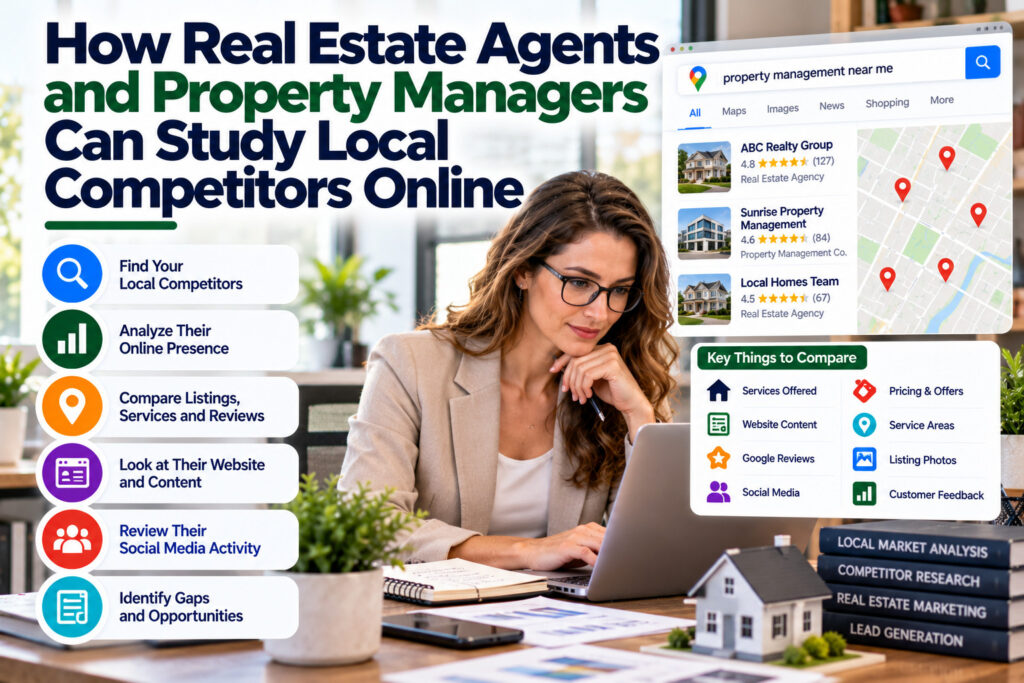
Start with the searches your customers use. Search for terms like “property management Columbus,” “homes for sale German Village,” or “realtor near Clintonville,” depending on your business. Use a private browser window and note which companies appear in the map results and the first page of regular results.
Your search competitors may differ from the companies you compete with for listings or clients. A national portal or a single agent with strong reviews might outrank a large brokerage. Write down the five to seven names that appear most often. Repeat the searches from a few different neighborhoods if you can, since results change with the searcher’s location.
Compare Profiles Side by Side
Build a simple spreadsheet. For each competitor, record their Google Business Profile category, number of reviews, average rating, how often they post, and whether they respond to reviews. Note the photos they use, the services they list, and the neighborhoods they mention.
Then look at their websites. Do they have neighborhood guides, market reports, or FAQ pages for landlords or buyers? Pages like those answer common questions and give visitors a reason to stay. Compare that against your own site honestly.
Turn Findings Into Practical Steps
Focus on gaps you can close realistically. If competitors have twice as many reviews, create a consistent system to ask satisfied clients. If they publish neighborhood guides and you do not, write one for the area you know best. Avoid copying their content, since original local knowledge carries more value.
Check where competitors appear in directories too. Browsing the Real Estate and Property category on Biz Trophy shows how other local agents and managers describe their services. If competitors have complete, specific listings there and you do not, adding an accurate Biz Trophy profile is a simple step toward matching their presence.
Learn From Competitors, Then Do Your Own Work
Competitor analysis works best as a planning tool. Identify who shows up for your key searches, compare their profiles and content with yours, and pick a few realistic gaps to close. Keep your own details consistent on Google, your website, and directories like Biz Trophy, then repeat the review every six months.
Frequently asked questions
How often should I check what competitors are doing online?
Every six months is a practical schedule for most local businesses. Check more often if you notice a sudden change in calls or inquiries. Keep your spreadsheet from each review so you can compare changes over time. A shared folder keeps every review in one place.
Can I see my competitors' website traffic?
Tools like Semrush and Ahrefs estimate competitor traffic and keywords, but the numbers are estimates and can be far off for small local businesses. Use them to spot trends and topics, not to make exact comparisons. Your own analytics remain the most reliable data.
Is it okay to copy a competitor's neighborhood guide?
No. Copying content raises copyright concerns and provides no new value to readers. Use competitor content to see which topics matter, then write your own guide with your firsthand knowledge, such as local schools, commute times, and market trends you have observed.
Why does a smaller competitor outrank my larger brokerage?
Local results depend on relevance, distance, and prominence, not company size. A smaller competitor may have a more complete profile, more recent reviews, or more locally relevant content. It might also be closer to where the searcher is located. Study what they do well before assuming the system favors them.

Admin
Practical advice for business owners who want to be recognised for the quality of their work.